Moves Of The Diamond Hand might be one of the whackiest indie games I have had the pleasure of stumbling across during our weekly indie game night. The game is described as a first-person urban RPG, powered by dice and intrigue, and I was certainly intrigued.
Opening the game up, you’re greeted by a bizarre main menu with a bird man and an acid trip of an art style. That does look very odd next to the very plain design of buttons and the odd choice of font, but don’t let that put you off as there is something really enjoyable behind all this. Click start and you’re able to select a difficulty and a colour. There’s even custom difficulty settings which is a nice touch. For my run I just went with the standard difficulty, and after a bit of a long loading screen we were in.
Moves Of The Diamond Hand Main Menu
The game starts you off on a train already at the station with one man on the train called Luke. He was apparently your music teacher at one point in time and he goes ahead and introduces you to the character sheet and gives you points to spend on the various skills. These skills are what you will be using for a lot of the interactions in the world. An example of this is when you finally step off the train and step into bubble tea that had been dumped out in front of it, and you have to select a skill to check to avoid or embrace the fall into it. Then you roll against the odds.
Your music teacher Luke, who is holding a pepper for some reason
Every time you fail or succeed you’ll earn more points to spend based on your rolls, and the more points you stack into one skill the more advantages you’ll get from it. The only danger you really have is the chance of losing one of the two stats, health or nerve. If you lose all of these it’s game over and you have to reload. Luckily there are a variety of items and different disguises that you can pick up to modify your rolls and even gain back health or nerve.
7 Skills to invest in and I went all in on deception
As silly as the game seems it’s surprising in depth and sucked me in really quick, not only mechanically but in how interesting the world is, from slipping on bubble tea to stealing a key from a failed clone experiment bird man to trying to solve the mystery of a missing bass. Right now the demo seems to be showing off the first full chapter of the game, and with early access the 2nd chapter has become available, so if a 1stp person adventure through an acid trip of a world with the depth of a traditional tabletop sounds like your jam, I would highly recommend checking it out.
Last night NVIDIA announced DLSS 5, what they are calling the company’s most significant breakthrough in computer graphics since real-time ray tracing and well there’s been a mixed reaction.
NVIDIA’s DLSS 5 reveal video
According to NVIDIA, DLSS 5 takes the colours and motion vectors of each frame before then feeding it into their AI model to create photo-real and lighting and materials. Now the use of gen AI here of course is going to immediately get people up in arms. But I don’t think the only issue is the idea of AI being used. I think the more we chase realism, the more uncanny and jarring the jump will be. Especially when we’re going back and retroactively applying it to games that we already have an established perception of the characters. It really doesn’t help that the model that they’re using does look like the average AI generated video.
The Starfield one I think looks better, feels like one of those which way memes
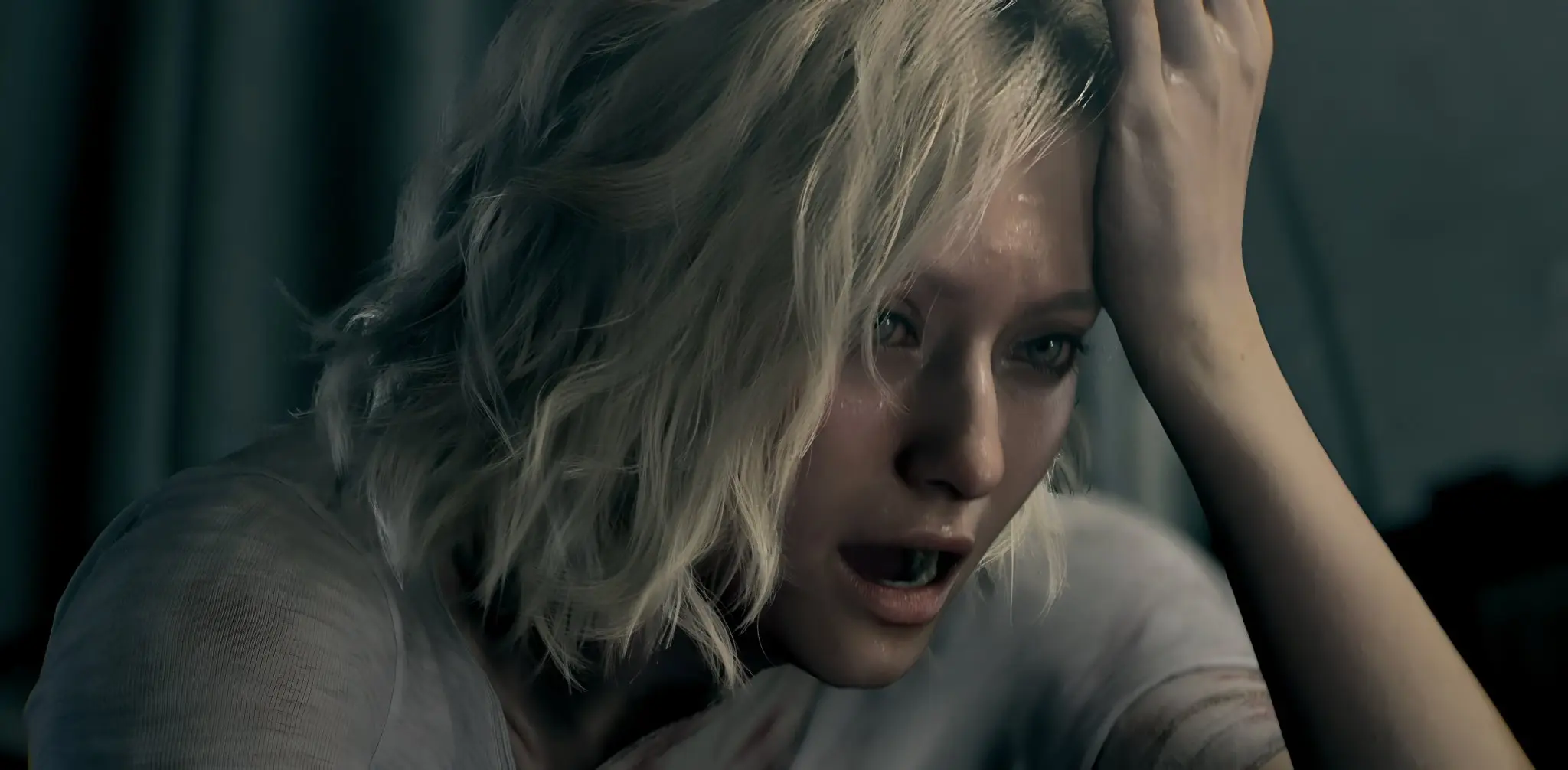
There were a few frames or games where it did look like an improvement. Starfield for example, I think might have actually been an improvement but then when I’m looking at the comparisons for Resident Evil Requiem and Hogwarts Legacy, it feels like a downgrade. I spent way too long on NVIDIA’s 4k comparison of Grace trying to pinpoint what part of my brain doesn’t like it. The lighting while seemingly an improvement, makes the rainy Wrenwood street much less moody, Grace looks like a completely different character, darker features are overly prominent, her lips seemingly become fuller and she just generally looks older.
The comparison of Grace from Resident Evil Requiem that feels off
Some of this could just come down to the frames they have given us combined with the photorealistic lighting as some other clips I have seen look slightly better but something is being lost here. I do think already having an established idea of how the character looks beforehand really doesn’t help though.
Now while I still have reservations about how this looks, NVIDIA do say that DLSS 5 provides game developers with detailed controls, so they can maintain each game’s unique aesthetic. Which I’m not really seeing right now in the Resident Evil example at least but perhaps it needs more tweaking as it won’t be available for the game until fall.
This one doesn’t look as jarringly AI as the first Grace one
Of course the technology will improve with time and a lot of the big publishers already seem to be on board with this so regardless of if people want it or not it’s on the way. However it is seemingly only going to be available for the RTX 50 series cards right now, which does make me wonder how much time is worth spending tweaking it to ensure it maintains the game aesthetic, when most people aren’t going to be experiencing it just yet.
So I do think there are some genuine concerns with hardware costs rising and how much style might be lost in games that don’t take the time to properly tune it, photorealism works for some games but it’s not something I’d want every game to chase. But it is for now at least going to be an option we can turn on or off and from the reception I’ve been seeing it’s one that a lot of people are going to be playing without.
Your Resident Evil 9 Ending can go one of two ways and according to RE.net 56% of players chose the wrong ending on their initial playthrough. If you’ve beaten the game and linked your account you’ll be able to see your own stats alongside the global averages and the initial ending choice was really surprising.
For those of you that haven’t played the game (I’d recommend playing before reading any further).
For those of you that don’t recall how the ending went down. Just 5 minutes prior you have Grace at a computer, pull out the disk that is emphasised as being very important and watch a video of Spencer talking about his regrets. Elpis is mentioned as being hope and while it’s never explicitly said that it’s a good thing it is heavily implied over and over.
Cut to 5 minutes later you have a dying Leon not wanting to let anyone down telling Grace to destroy it and Zlbert Zesker pressuring Grace to release the virus.
So the good guy that everyone loves wants everyone to destroy it, the bad guy wants you to release it and you finally have to make the choice. I think it’s easy to hesitate at this point but you and Grace just got that classic endgame Resident Evil info dump. So despite everything, releasing it seems like the obvious choice right? Apparently not.
It could be that the majority of players just wanted to see what would happen if they chose the wrong ending, but my feeling is the average person just watches the other ending on YouTube with most games. So why did 56% of players choose so poorly? For as much as people joke about yellow paint, did we need it splashed on one side of the screen? Honestly it’s hard to know how much more they could convey the correct ending without explicitly saying it.
Even once you make a choice it plays voice lines from different characters that reiterate what’s going to happen with that ending. You’re then given one final are you sure? This lets you select the other option then you’ll get the different voice lines there and again if you choose the good option, they bash you over the head with lines about hope. Even ignoring everything else, releasing it was the only chance of Leon being saved, unless people really expected Ada Wong to swoop in with a cure at the last second and save the day.
Again I’m sure some people just wanted to see the bad ending but I do find it really interesting that the majority of people still needed to be explicitly told what the wrong ending was here.
There’s always a lot of discourse around game design and the way we signal to a player where to go or what to do, the outrage around the idea of yellow paint ruining people’s immersion. But at the end of the day I think the average gamer more often than not needs more explicit signals, they struggle to get through games more than you or I and I think that’s ok. There is definitely a balance when it comes to this and finding the line for this is what makes designing and writing for games so difficult sometimes but it can be done.
Now let me be very clear, when it comes to the ending of RE9, I would not want them to change a thing about how they signal it. I think they signal it hard enough and if they were more explicit, I think it would have taken away from the ending. From what I understand, you can reload and go for the correct ending if you pick poorly and to me this is probably the best balance you can get. If a player doesn’t quite follow the story, I don’t think there is a better way to punish them than watching their favourite character get their head blown off.
Resident Evil is back and better than ever. After remaking 2 through 4, Capcom feels like they’ve finally perfected their RE blend with dual protagonists Grace and Leon.
Before you start, you’re given the option to choose what perspective you play in with each character. The recommended perspective for Grace is first person and third person for Leon. You’re free to switch them around, of course, but I stuck with the recommended settings to get that RE7 and 8 feel for Grace and the more appropriate RE4 feel for Leon.
After choosing all your settings, the game opens up on Grace, our new clumsy, overly anxious protagonist, as she is forced to confront her past trauma. Not that she doesn’t have plenty of reason to be nervous in this game. In fact, the added character flaw of her being a clutz helps you feel just as nervous as she knocks things over and stumbles about.
If you do decide to play in third person, Grace’s light jog gets a little faster during chases, at the added cost that she will actually trip over herself every now and again. I think this is an interesting way of balancing her speed while making her third-person sprint look a bit more natural.
After stumbling around a derelict hotel for a little bit, surprise, surprise, zombies show up and it looks like there might be some kind of virus. Cue Leon S. Kennedy.
While Capcom might have waited a while before revealing he was in the game, they wasted no time letting you get a feel for how he plays. Prior to the Leon reveal it was said that they couldn’t make Resident Evil scary with him anymore, and they weren’t exactly wrong.
After his many feats it would be difficult to make a more experienced Leon struggle and make it believable. So instead they did the next best thing and made him play like the RE equivalent of the Doom Slayer, accompanied by his very own entrance track, and it’s beautiful.
Leon, now with his very own heat actions
To start, his segments are short and sweet. When the cutscene starts and you hear that music play, it does in fact bring a smile to my face. That smile does not fade as Leon rips and tears his way through groups of zombies, utilising a mix of his new trusty axe, which you’ll find yourself sharpening over and over, his old reliable roundhouse kicks, and whatever random objects he might find in the environment, including a medically certified chainsaw.
THE CARE CENTER
The difference in how the protagonists play does at times make it feel like two different games, especially with the two main locations you’ll find yourself in.
Grace takes the lead in the Care Center, which is a beautifully crafted building design wise and visually. It’s very reminiscent of the Spencer Mansion and RPD. Exploring here as Grace you get the classic Resident Evil experience. There is limited inventory space, storage boxes to manage said inventory, and if you go with the classic difficulty you’ll only be able to save at the typewriter if you have ink ribbons.
Making your way through the Care Center, you’ll encounter a variety of zombie types with the new mutated strain of virus. This strain leaves the zombies with some memories of their past life, making for more unique encounters and ways to deal with them.
One very early example is a zombie who is calling for lights out and flicking the light switch over and over. If you flick a nearby light switch he’ll switch his attention, allowing you to sneak around him. It’s a really cool mechanic, and you’ll find different notes on who some of these people were prior to the virus. I kind of hope this is something they’ll do again as it is a big part of what makes the Care Center section as charming as it is.
The other big mechanic you have as Grace is collecting blood. You’ll not only be able to collect it off the zombies you kill, but also out of the many buckets of blood lying around the Care Center. With this blood and various bits of scrap or herbs that you find, you can craft a variety of items once you discover the notes or blood samples for them.
One of the big items you’ll learn to craft is the Hemolytic Injector, which lets you stealth kill zombies. You can even inject them mid combat if you manage to stun the zombie. It is most definitely the most effective way to take them out as Grace, as it leaves nothing behind. That is something you might want to do with the very welcome return of the Crimson Heads. If you know, you know.
Nothing in this game feels like it outstays its welcome. Just as you’ve had your fill of wandering around the Care Center struggling to survive, you’ll find yourself switching back to Leon. This gives you that sense of catharsis as you get to dispatch any remaining zombies with ease and quip a few one-liners.
These moments in the Care Center are short and sweet, leaving most of the Leon segments to the second location of the game, Raccoon City.
RACCOON CITY
Now I will say that Raccoon City has a lot less charm than the Care Center. However, it is visually hard to match that charm when the city itself is in ruins.
They do, however, get a lot sillier here in the best ways possible. I had multiple moments where I asked, “I wonder if we’ll be doing this thing,” and we sure did. There are multiple encounters with past Resident Evil tropes and characters here and it definitely plays on your nostalgia once you reach a certain point. But much like the rest of the game, nothing ever outstays its welcome. Each area you go to has something different for you to do.
This part of the game is where you’ll probably see the most division between fans, as inventory management and limited saves no longer become an issue. It becomes much more of an action game.
Leon has his massive briefcase that he can fill to the brim with items, and you’ll find laptops around that you can save on. Instead of the item box you now have a shop box, and each zombie you kill gives you points toward buying new weapons and upgrades.
This does mean you can’t carry every weapon, however. You’ll find yourself having to sell one to clear some room when buying another, but you generally have room for every different weapon type.
You still have to be aware of managing ammo and heals at the very least, but you’ll generally find yourself getting plenty of it when you need it.
STORY
Storywise I really enjoyed it, the writing and the voice acting especially by Grace’s voice actor was phenomenal. It felt like the perfect blend of seriousness and silliness with some great reveals throughout. The story did almost everything I wanted it to do, there were a couple of characters I was hoping to see but I think it would have done nothing to serve the plot and really taken the spotlight off some of the big reveals and our new protagonist. The only issue I could see in the plot was the motivations of a certain character, however with the rumoured upcoming remakes we might see a slight change in this character or it might be explained in the age of the character.
The game isn’t the longest with my final playtime showing as only around 10 hours, 40 minutes, however the final playtime doesn’t seem to take into account inventory management and note reading and according to REnet the average first playthrough takes about 16 hours which sounds about right for the average player. Then when it’s all over you unlock the insanity mode and the bonus content that you can spend points from achievements on to unlock costumes, new guns, charms or modifiers like infinite ammo and infinite hatchet durability, giving you some fun reasons to replay the game, which I found myself almost immediately doing.
FINAL THOUGHTS
Overall, the game felt like the best Resident Evil has been since Resident Evil 4. From the charming horror filled Care Center to the more action packed Raccoon City, the game is constantly switching up what you’re doing with constant highs in the gameplay and story. It’s the perfect blend of action and horror that opens the door for bringing the classic Resident Evil characters and feel back.
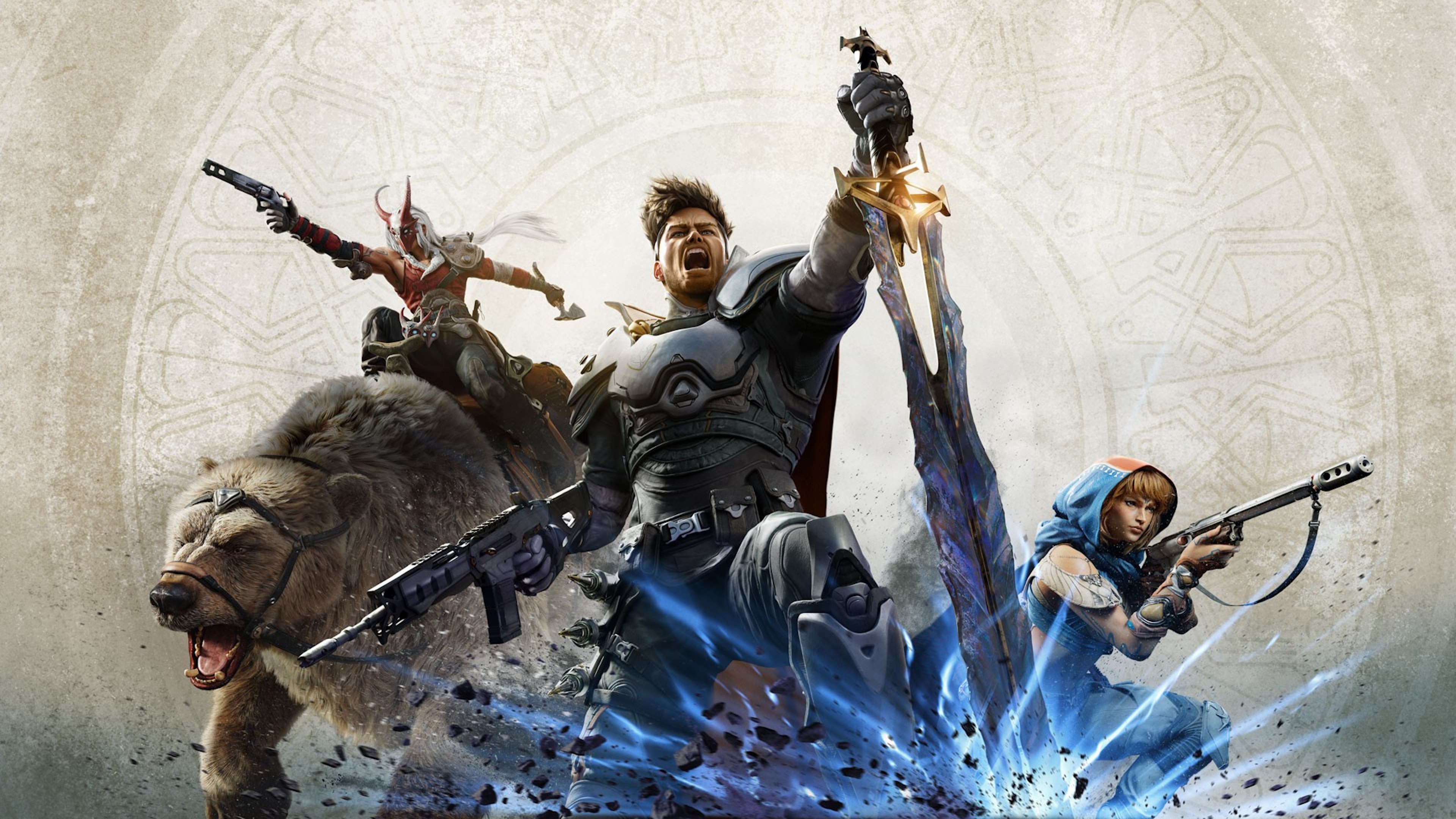
Highguard recently put out a statement announcing that they have made the difficult decision to shutdown Highguard on March 12th. Alongside this, they released one final update featuring a skill tree, a new Warden, a weapon, and account-level progression, which unfortunately will not matter much in a week’s time.
Now the question is why did Highguard fail? Was it truly a bad game, or was it the internet hate mob? The truth is that this project had multiple points of failure in its marketing.
If they had gone down either path, however, I believe we would still be in the same place we are today with Highguard closing down.
The reason for this is the same reason that 95% of these live-service games will fail or have already failed. The industry is full of live-service experiences that players are already invested in. Because of this, it is not just about selling players a new experience. It is about pulling them away from the ones they are already committed to.
You can release a game like Highguard that does something a little different and feels decent enough, but why would that be enough to pull people away from the games they are already invested in?
To me, it looks like a lot of studios and publishers are taking shots and hoping they have the next Fortnite. It is hard to say if this was exactly the case for Highguard, but the studio reportedly took on investment from Tencent and hired a large team that the game unfortunately would never have been able to support without those investments, unless it truly became a breakout hit that captured a lot of attention.
I am sure there are also factors behind the scenes that are unique to Wildlight’s situation, but this same story will likely repeat itself for many studios that choose to go down this route.
So if you are looking to create a live-service game, more often than not you are gambling and you should be aware of that. You have to produce something that not only competes for attention in an already saturated market, but also do it on a budget that can sustain your team. Otherwise you are throwing it all on black and watching the wheel spin.